
Ghost City
A sentence that feels like home.

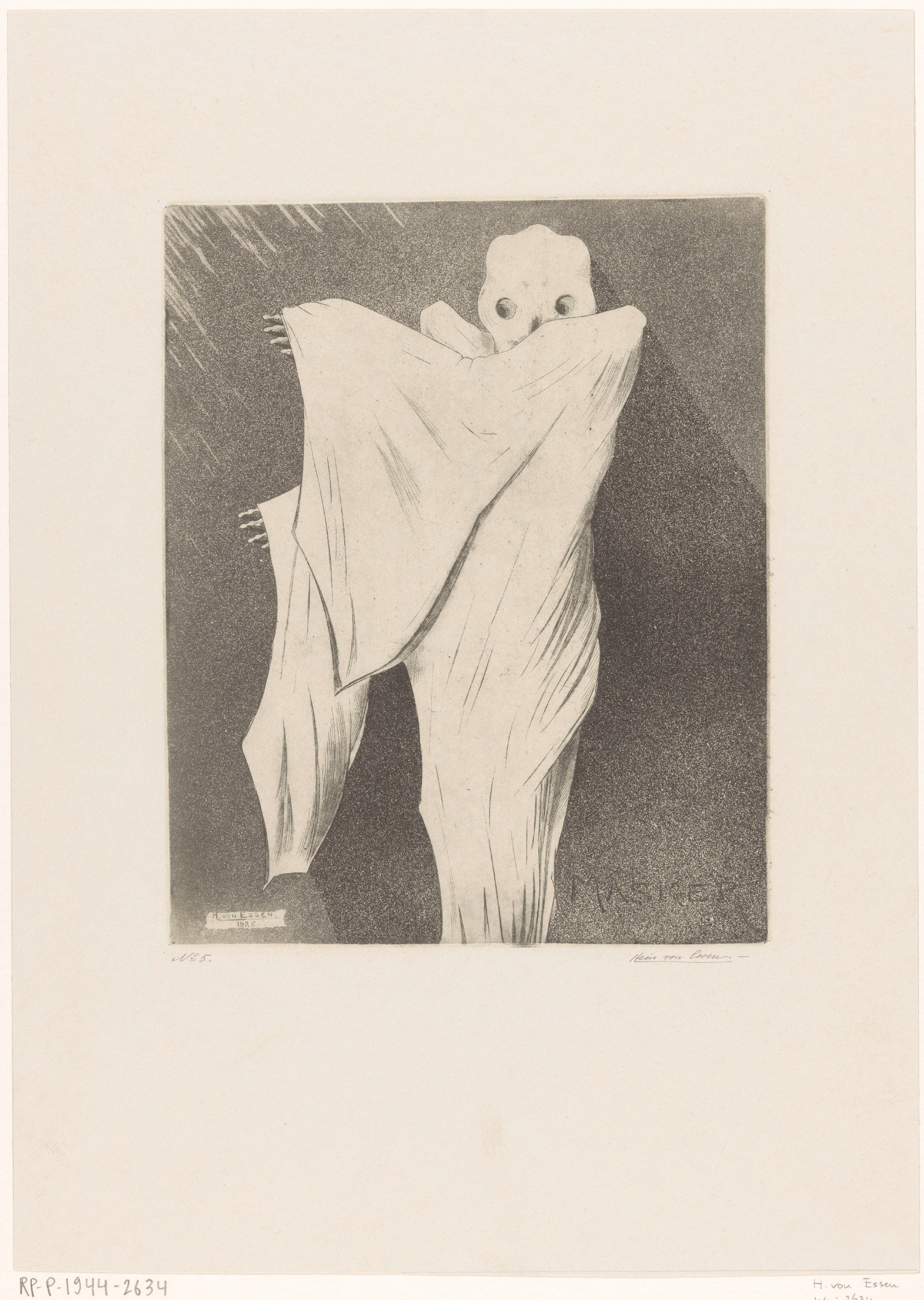
Hein von Essen, “De Dood” (1926)
Last fall, I went to a reading with the writer Caren Beilin. She said her sentences are so compressed with meaning because that is how a street in Philly, a city she loves and grew up in, feels to her. She eloquently captured how I feel about New York, the city I was born and raised in, and where I currently live. New York is a lot of things. But, above all, for me, it is compressed with meaning.
In my 20s, I wanted to be anywhere but here. In that decade, I zig-zagged around continents. I remember walking the streets of Varkala in black skinny jeans and a black long-sleeve, drenched in sweat. It was December and I was heading to meet a friend in Oslo next, and the clothes I tried on in a local shop didn’t fit over my head, and I didn’t want to call attention to myself by wearing shorts and a tank top, and at that point, I traveled lightly and with a backpack, having given up on anything with wheels after dragging luggage through sand trying to reach a hostel in an off-the-grid beach town in Uruguay… If you’d told me back then that I’d be living in New York in my late 30s, I would have been surprised, maybe even horrified.
Thus my bafflement that I’ve accepted, and even befriended, this city of ghosts. The thing with this sixth sense is that you have to interrupt the present to make room for apparitions. It’s a gift. A very distracting one. For example, I recently went to Té Company in the West Village. When Gael, who only recently moved to the city, asked if I’d been there before, I paused. Thought for a moment. I made sure to put our name on the waitlist first. Then, I brought up the time I went with my mom for my first Covid birthday. How they started doing iced teas, and only to-go. I was taking a Zoom poetry class on active listening. And so, when I asked my mom how her tea tasted, and she said, “like perfume,” what I heard was a line to share with others. Later, once we were seated and I saw Gael’s face light up over a bite of a savory pastry filled with steaming daikon, I tucked the memory away.
Afterwards, when we went to the Angelika to watch a film, I saw a sign for Greene Street. I felt like mentioning that during college, I worked in a French boutique on that street. This boutique dealt almost exclusively in white button-downs. The more elaborate ones, say they had ruffles made of organza, could cost upwards of $600. We pressed these blouses by hand, on an ironing board in a corner of the store. But all of this felt random to the moment and I kept it to myself. Two nights later, my manager at the boutique, Dahlia, visited me in my dreams. She had gone into the business of shaping eyebrows and was glad to see me. Sometimes, when you come across a ghost, it will follow you for a little while. Just this morning, I found myself using one of Dahlia’s signature lines from back then: “Maybe I keep you.”
Reading Thomas Bernhard’s memoir Gathering Evidence, the following reflections on Salzburg resonate within me because they capture the feeling of how a place acts on you as much as you act on it, if not more:
And it is here that I am at home, here on this lethal soil from which I sprang. In this city and its surroundings I am more at home than others; and whenever I walk through the city today, imagining that it has nothing to do with me because I wish to have nothing to do with it, the fact remains that everything about me, everything within me, derives from this city. I am bound to it by a terrible, indissoluble bond. My whole being has its origin in this city and this landscape. Do what I will, think what I will, I become more and more conscious of this fact, and one day this consciousness will grow so intense that it will destroy me. Everything within me is at the mercy of this city of my origin.
There can be violence or love in how we’re held by a place. I can easily get teary-eyed for New York just thinking about what it might be like to leave it. I keep returning to a nostalgia that hasn’t even come to pass because I know what I find there. And what I find there are subtle notes of sweetness.
In last week’s newsletter, I wrote a bit about an interview with the poet Alice Oswald in The Paris Review, no. 254. There was something else Alice said that caught my attention, that propelled the energy behind this post:
There was a woman called Miss Waters, who lived up the lane. She’d never been further than the next-door village […] I used to go up the road just to talk to her, and during one of these conversations she broke off because she’d heard a bumblebee go into a foxglove and change the tone of its buzz. She said, “Did you hear that? I love that sound.” I remember thinking, If you don’t move away from a village, that’s the sort of thing you notice. I made a determination at that point that I wanted to be that sort of person.
During the hour we waited to get into the tea house, which is “so New York,” as Gael put it, we searched for a thrift store nearby on Google Maps. When we came upon it, he recognized the shop before I did and said we had been there before, when we were looking for Halloween costumes. Inside, he headed toward one of the racks and held up a blazer.
“Remember?” he said, turning to me, “It’s the one I tried on last time.”
I laughed and replied, “I can’t believe it’s still there.”